Quick Answer
Homeowners are replacing wood and steel front doors with uPVC (vinyl) doors for four main reasons: they won't warp, crack, or rust; a multi-chamber profile and weather seals improve energy efficiency; multi-point locking adds security at several points along the frame; and the doors need virtually no maintenance — no sanding, painting, or refinishing.
When choosing a front door, appearance matters, but so do daily comfort, security, and long-term maintenance costs. Traditional wood and steel doors have been the primary choices for entry doors in American homes for decades. Today, however, homeowners tend to switch to uPVC entry systems.
uPVC, or unplasticized polyvinyl chloride, is the technical name for the high-durability material commonly referred to as vinyl in the U.S. You may already be familiar with vinyl as a material used for windows and exterior home siding. But specialized exterior-grade uPVC can also be suitable for entry doors. When you select modern uPVC exterior doors, you opt for solutions that combine low maintenance with sleek, durable architecture.
More Than Just a Front Door — What's Inside a uPVC Door
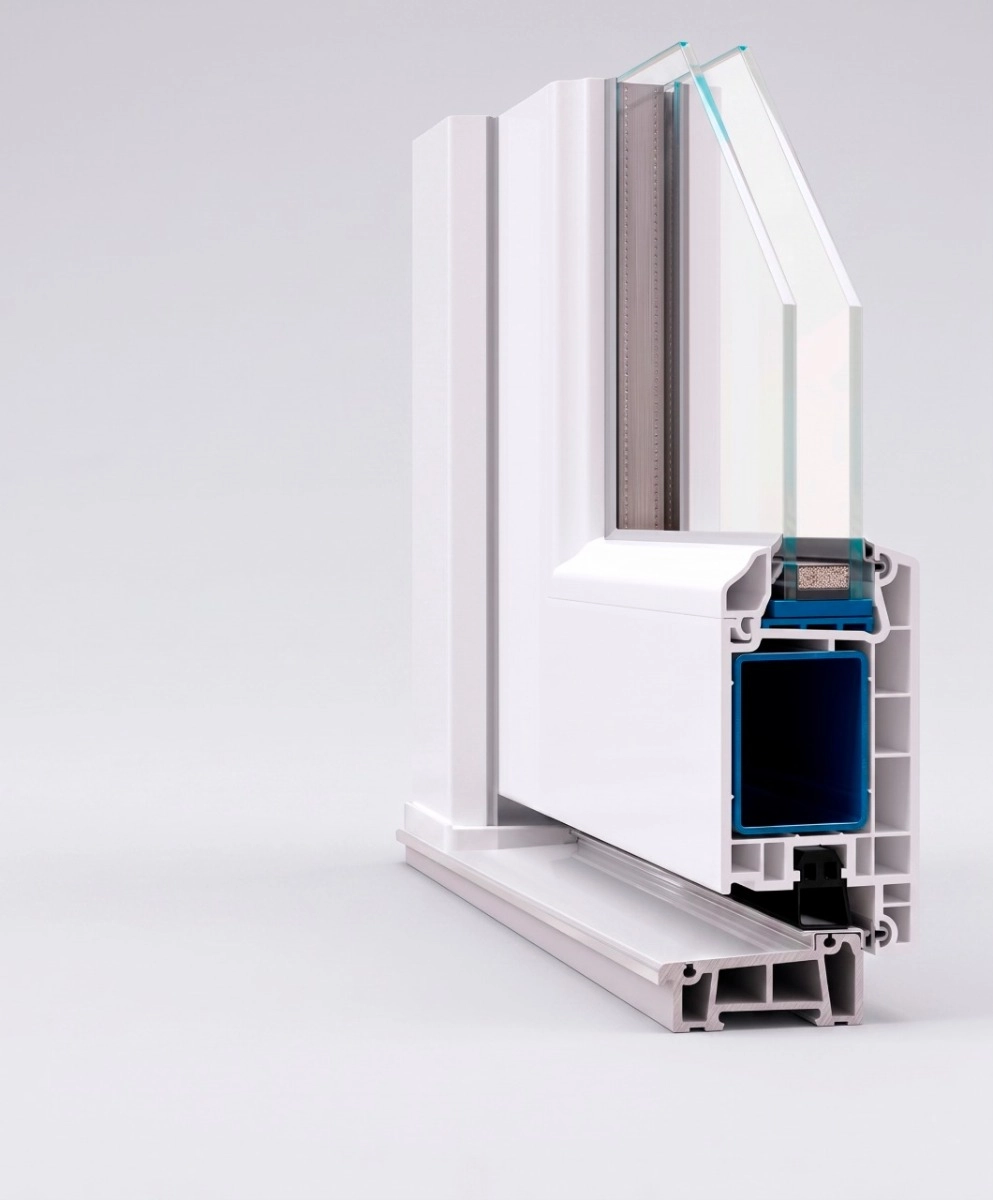
How does modern uPVC differ from other materials? Unlike older hollow-core doors, high-performance uPVC entry doors have a strong internal structure that also offers better stability.
Key structural elements include:
- Reinforced 2 3/4" (70 mm) profile. The frame and sash feature a robust 2 3/4" (70 mm) depth containing internal chambers designed to trap air and prevent heat transfer.
- Insulated glass units. Dual-pane tempered glass panels integrated with warm-edge spacers reduce thermal bridging and incoming noise.
- A multi-point lock. It secures the vinyl front door at several points around the frame, making it harder to force open.
uPVC vs. Wood vs. Steel — How Do They Really Compare?
The right entry door material depends on durability, overall performance, and maintenance needs.
| Parameter |
uPVC (Vinyl) |
Wood |
Steel |
| Moisture and weather resistance |
Won't warp, swell, crack, or absorb moisture in heavy humidity or rain |
Susceptible to swelling, warping, and rot over time without sealing |
Moisture resistant, but exposed raw metal can rust if scratched |
| Maintenance requirements |
Virtually zero. Periodic wiping with a damp cloth and mild soap |
High. Requires regular sanding, staining, or painting every two to four years |
Low to moderate. Periodic inspection and paint touch-ups for chips |
| Energy efficiency |
High. Multi-chamber internal profile acts as a thermal barrier |
Moderate. Natural insulator, but vulnerable to air gaps if warped |
Moderate to high. Depends on internal foam core and thermal break quality |
| Rust and rot resistance |
Immune to rot, decay, corrosion, and rust |
Highly vulnerable to decay, rot, and insect damage over time |
Vulnerable to rust at door edges or damaged paint areas |
Energy Efficiency — Lower Bills, More Comfort Year-Round
Drafts near the front entrance are one of the leading causes of increased heating and cooling bills in residential homes. Traditional single-layer wood or metal doors also transfer outdoor heat and cold into the entryway more easily.
uPVC entry doors, in contrast, work much like a high-quality thermos. The interior structure of the 2 3/4" (70 mm) profile contains several isolated air chambers. Because still air is a poor conductor of heat, these chambers help block outdoor heat and cold from entering your home.
Dual-layer seals also help prevent drafts and air leaks. As a result, your home stays warmer in winter and cooler in summer. On top of that, you are able to lower energy consumption year-round.
Security — How Multi-Point Locking Actually Works
Security is one of the top priorities when selecting a front entrance door. Unlike traditional single-point locks, multi-point locking systems secure the door at multiple points along the locking edge.
When the handle is lifted, the internal mechanism activates the locking rail, moving multiple locking points into the frame keeps. This secures the door along its full height rather than relying only on one central locking point. The multi-point design helps distribute closing pressure evenly, improves seal compression, reduces drafts, and provides enhanced resistance against forced entry.
(Almost) Zero Maintenance
Unlike real wood, which requires regular sanding, stripping, and refinishing to protect it from the weather, uPVC needs very little maintenance.
- No painting or staining. Its UV-stabilized finish doesn't peel, flake, or blister.
- Easy cleaning. Wipe down the door surface once or twice a season using warm water, mild dish detergent, and a soft microfiber cloth.
- Hardware upkeep. A small amount of silicone lubricant on the hinges and uPVC multi-point lock rollers once a year lets the mechanism work smoothly.
Products are also backed by a robust warranty (see our warranty information for more details), ensuring no hidden maintenance expenses and long-term peace of mind.
Modern Design That Complements Any Home
Functionality should not mean sacrificing curb appeal. Modern manufacturing allows uPVC entry systems to complement a wide range of architectural styles, from contemporary minimalist homes to classic suburban exteriors.
- Classic white and neutral tones. Clean lines and smooth matte whites are ideal for bright facades.
- Realistic woodgrain finishes. High-quality laminate surfaces capture the natural look and character of real oak, walnut, or mahogany, adding the warmth of wood aesthetics while maintaining the durability and easy care of vinyl.
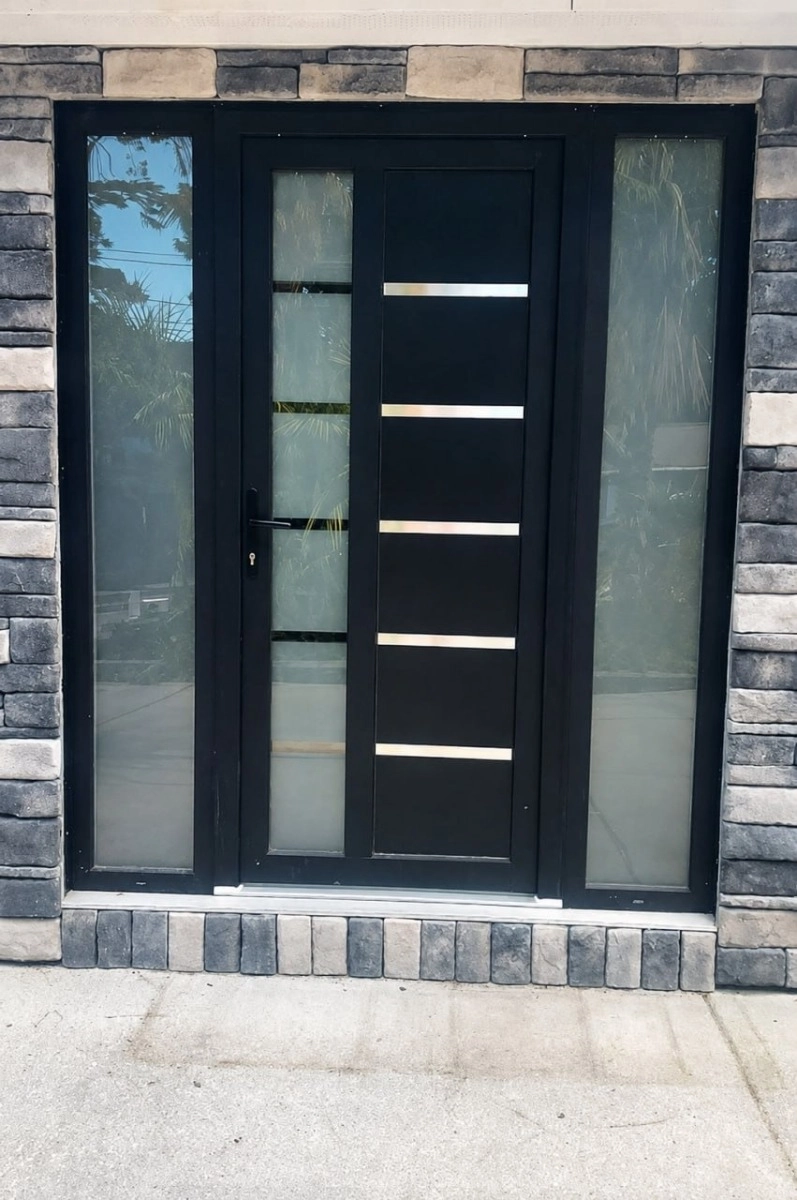
- Dark and statement colors. Popular options include Anthracite Grey, Matte Black, Walnut, and a wide range of custom colors.
- Glass panel customization. Options range from clear double-glazed panes to frosted privacy glass and decorative inserts.
uPVC Front Doors — An Honest Look at the Pros and Cons
To make an informed decision, consider reviewing both uPVC doors pros and cons.
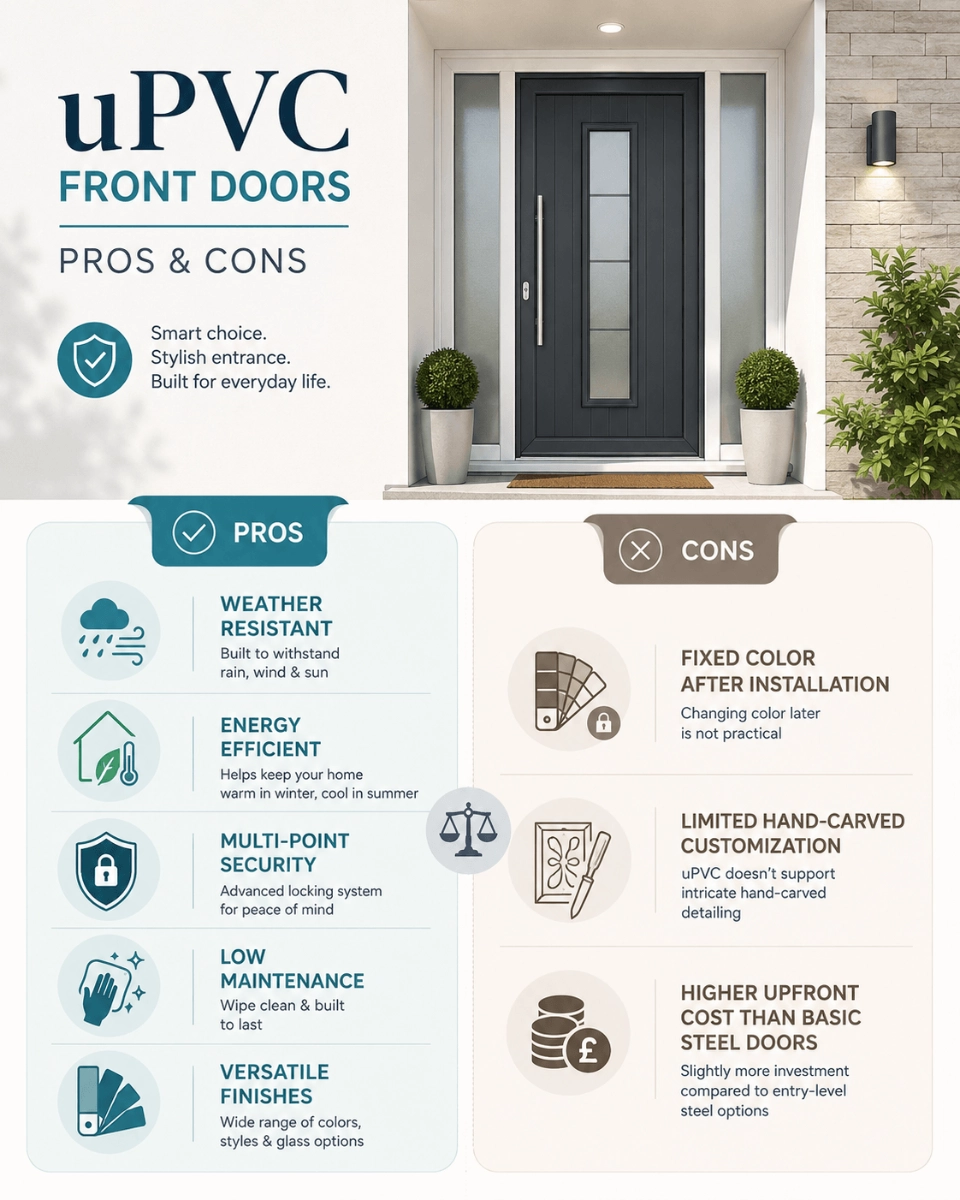
Pros
- Weather and damage resistance. uPVC doors resist weather damage and will not rot, warp, rust, or absorb moisture over decades of exposure.
- Advanced multi-point security. They lock into the frame at several points, making a vinyl front door harder to force open.
- Superior thermal insulation. Multi-chamber profile design minimizes energy losses.
- Minimal upkeep. Requires no painting, staining, or surface sealing throughout its lifespan.
- Versatile finishes. Doors are available in smooth architectural shades and woodgrain finish.
Cons
- Fixed color after installation. When it comes to uPVC vs wood front door comparison, uPVC cannot be sanded down and repainted a different color later on if you decide to change your home's exterior palette.
- Not fully custom hand-carved. While available in standard panel designs, doors cannot be hand-carved like custom solid timber.
- Upfront investment. Initial cost can be slightly higher than basic single-layer steel doors due to the complete pre-hung system, including the frame, full hardware set, and ready-to-install components.
A Smart Upgrade for Any Home
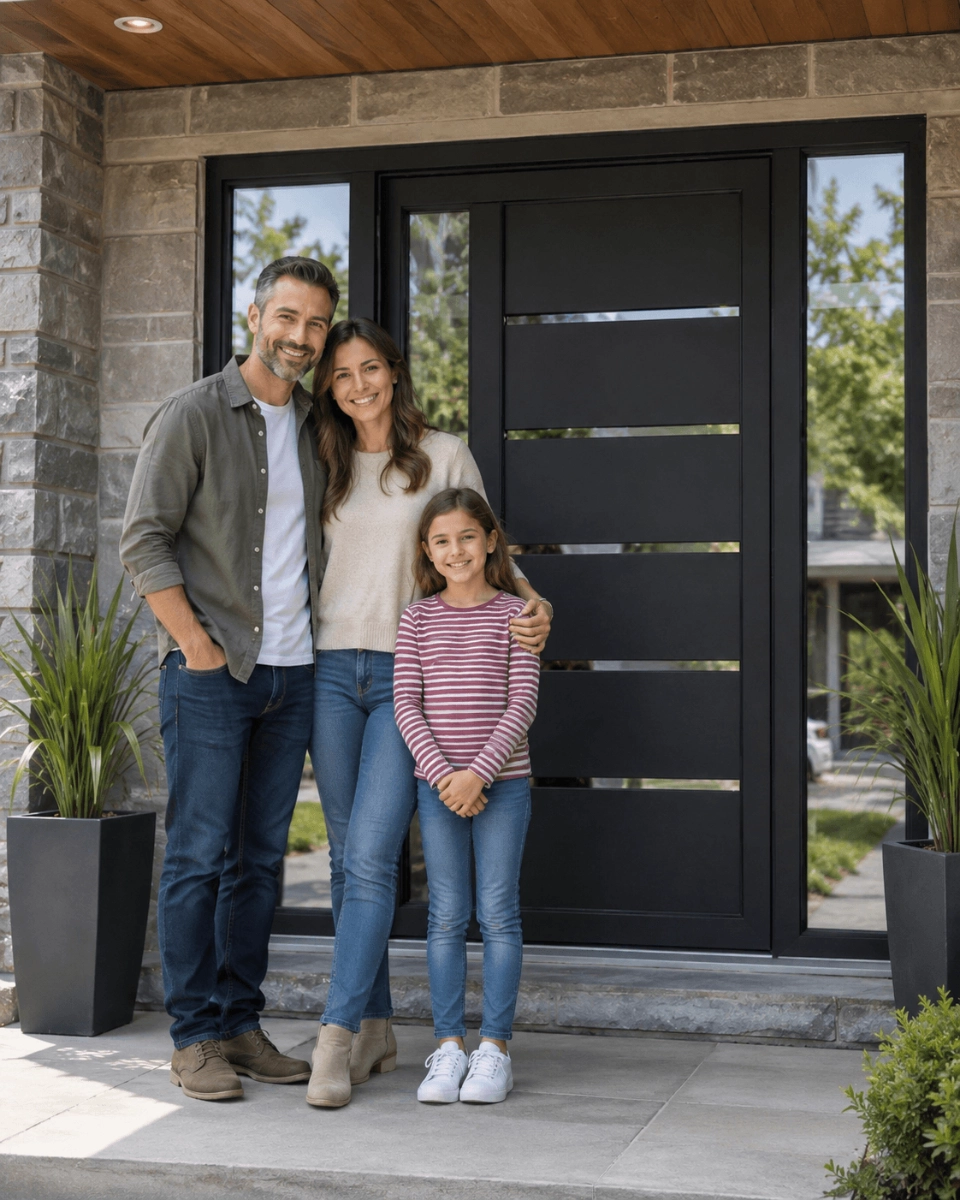
A front door is one of the first things people notice about a home. It also affects security, comfort, and energy use.
Ready to find the perfect entry door for your home renovation? Explore our complete collection of high-durability vinyl exterior doors and check out our convenient delivery services to get started today.
Frequently Asked Questions
1. What does uPVC stand for?
uPVC stands for unplasticized polyvinyl chloride, though it is often simply called vinyl. Unlike standard flexible PVC, uPVC contains no plasticizers, which makes it rigid and able to withstand years of exposure to the weather.
2. How long do uPVC front doors last?
A well-made uPVC front door can last between 25 and 35 years. Since it does not rot, rust, or absorb moisture, it can stay strong and work properly for much longer than steel or wood doors.
3. Are uPVC doors more secure than wood or steel doors?
Yes. uPVC doors have a steel core and several locking points around the frame. A standard front door relies on one lock near the handle, while a multi-point system secures the door in several places. This leaves fewer weak spots and offers better protection.
4. Do uPVC doors fade or change color in direct sunlight?
Modern exterior-grade uPVC is manufactured with specialized UV stabilizers. This prevents the material from yellowing, cracking, or fading, keeping its surface finish vibrant through seasons of direct sun exposure.
5. Can a uPVC front door be painted a different color later?
It is generally not recommended. The factory finish is designed for long-term weather protection without painting. Standard DIY paints do not adhere well to uPVC surfaces and can peel over time.
6. How much does a uPVC front door cost compared to wood or steel?
uPVC doors offer a cost-effective middle ground. They are much more affordable than premium custom hardwood doors and often cost less over time than basic steel doors because they do not need repainting, sealing, or rot repairs.